The Short Answer
In 2026, the primary objective of legal AI for UAE law firms is to navigate a three-tiered jurisdictional reality: onshore civil law, DIFC common law, and ADGM common law. Effective platforms in this region must move beyond English-centric translation layers to native Arabic reasoning. For a managing partner, the transition to AI-assisted practice represents a shift from manual document review to strategic oversight, provided the chosen tool complies with Federal Decree Law No. 45 of 2021 regarding data residency. This guide outlines how to evaluate vendors based on linguistic precision, jurisdictional grounding, and deployment security to ensure your firm handles more cases with existing resources.
Why the UAE Legal Framework is Distinct
The UAE legal sector operates under a unique jurisdiction within a jurisdiction model that presents significant challenges for general-purpose AI. While much of the global legal tech conversation focuses on English common law, UAE practitioners must simultaneously handle federal civil laws, Sharia-influenced personal status codes, and the distinct common law environments of the Dubai International Financial Centre and the Abu Dhabi Global Market.
Linguistic requirements add a further layer of complexity. In onshore courts, proceedings and legislation are conducted natively in Arabic. Recent data indicates that approximately 98 per cent of all onshore legal documentation is authored in Arabic. Platforms that rely on a translation layer, converting Arabic to English to think and then back to Arabic, often fail to capture the technical nuance of civil law statutes. For cases involving government entities or local litigation, the risk of misinterpreting a specific decree via translation is a liability most partners cannot accept.
Furthermore, the regulatory environment for AI itself is tightening. The DIFC Data Protection Regulations, specifically Regulation 10, now require firms to appoint an Autonomous Systems Officer for high-risk data processing. Choosing an AI partner in the UAE is therefore as much a compliance decision as it is a productivity one. The software must not only read the law but also reside within a structure that satisfies local data sovereignty mandates.
What Legal AI Actually Does Inside a Firm
To move past marketing terminology, partners must understand the practical applications of AI across the lifecycle of their cases. In a UAE context, these applications are categorised by their ability to manage bilingual complexity and multi-jurisdictional research.
Legal Search and Research
Instead of Boolean keywords, lawyers query the system in plain language. The AI searches a database of over 300,000 legal documents, including Federal Gazettes and DIFC court orders, returning an answer that is cited to the exact paragraph. This allows a junior associate to verify the grounding in seconds rather than hours. The ability to query federal law in English and receive citations from the original Arabic text is a specific requirement for international firms operating onshore.
Contract Analysis and Review
When an agreement is uploaded, the platform flags missing clauses or inconsistencies against firm playbooks. It grades risks by severity, such as an invalid choice of law clause in an onshore contract, and provides recommendations that a lawyer can apply with a single click. This is particularly vital for real estate and construction cases where standard forms are often modified in ways that create latent liability.
Due Diligence and Smart Tables
For large-scale corporate cases, the AI extracts key terms, dates, and obligations from thousands of contracts simultaneously. These are populated into sortable tables, allowing a team to identify liabilities across a portfolio in minutes. This level of data extraction was previously cost-prohibitive for all but the largest mandates. In the context of UAE mergers and acquisitions, this allows for a level of depth in due diligence that matches international standards without increasing head count.
Knowledge Management
Every case handled by the firm contributes to a private, searchable knowledge base. Precedents and prior advice stay accessible, ensuring that the firm's expertise compounds over time. This prevents the loss of institutional memory when senior fee earners move on. In a market like the UAE, where talent mobility is high, capturing this intellectual property is a strategic necessity.
The Seven Questions to Ask Any Vendor
When evaluating a legal AI platform, the following questions help separate generalist tools from professional-grade systems designed for the UAE market.
1. Does it work natively in Arabic, or through translation?
Translation layers introduce significant risk. You should require proof that the system can reason in Arabic and cite Arabic-native statutes without intermediate English steps. A native approach ensures that technical legal concepts, such as force majeure as interpreted under the UAE Civil Transactions Law, are handled with precision. General AI models often confuse civil law concepts with common law equivalents, leading to advice that is technically incorrect for onshore cases.
2. Is it grounded in UAE law, and can it cite the source?
Hallucination remains a concern in general AI. Professional tools must be grounded, meaning they only provide answers based on a verified database of law. Every sentence the AI produces must have a badge or link to the source document. If a vendor cannot provide paragraph-level traceability, the tool is not suitable for legal work. Verification is the cornerstone of professional responsibility, and the AI must facilitate, not hinder, this process.
3. Does it cover onshore, DIFC, and ADGM?
A firm in Dubai often handles cases that involve both onshore litigation and DIFC arbitration. Your AI must understand the procedural differences between these systems. For instance, the recognition of without prejudice communications differs between onshore and offshore jurisdictions. A tool that only understands common law will provide misleading advice for a case before the Dubai Courts.
4. What are the seat minimums and pricing model?
International enterprise tools frequently enforce 25 to 50 seat minimums, making them inaccessible for specialist firms or focused pilot groups. Look for vendors that allow you to start with a specific practice area or a small group of fee earners without being locked into massive annual commitments. Flexibility in seat count allows a firm to test the technology on specific cases before committing to a firm-wide rollout.
5. Who does the deployment, and how long does it take?
Self-serve software often sits unused because lawyers do not have time to set it up. A professional deployment involves the vendor mapping your internal documents, standards, and languages. This configuration phase should take between two and eight weeks, resulting in a platform that requires zero additional training for your team. The objective is to have the AI adapt to the lawyer, not the lawyer to the AI.
6. Where is the data hosted and what certifications back it?
Under the UAE Data Protection Law (PDPL), cross-border transfers of personal data are restricted unless certain criteria are met. For many firms, a cloud-only model based in the US or Europe is a dealbreaker for government cases. Deployed AI stays inside your own infrastructure, satisfying the most stringent client requirements for data residency and security.
7. What happens when the law changes?
The UAE is currently one of the most active jurisdictions for legislative updates. Your AI must be updated daily. A static model that does not account for the latest ministerial resolutions or Court of Cassation rulings will quickly become a liability. Ask for a log of the most recent legislative updates integrated into the platform to verify the vendor's commitment to the UAE market.
The Vendor Landscape, Honestly
Choosing the right tool requires an honest assessment of your firm's size and the nature of your cases. The market is broadly split into four categories.
Enterprise Platforms (e.g., Harvey, Lexis+ AI)
These are powerful systems built for the world's largest law firms. They offer deep integration but often come with high seat minimums and long sales cycles. They are generally prioritised for firms with 50 or more researchers and may require significant internal IT resources to manage.
Regional Generalists (e.g., HAQQ, Legora)
These tools have a strong focus on the Arabic language and the GCC region. They are often excellent for solo practitioners or smaller boutiques looking for a self-serve application to assist with basic drafting and search. They typically operate on a subscription model rather than a custom deployment.
General Assistants (e.g., ChatGPT, Claude)
While fast and inexpensive, these models have high hallucination rates and zero grounding in specific UAE legal datasets. They should be used for administrative tasks only. Using a general assistant for case work or contract analysis poses a risk to client confidentiality and legal accuracy.
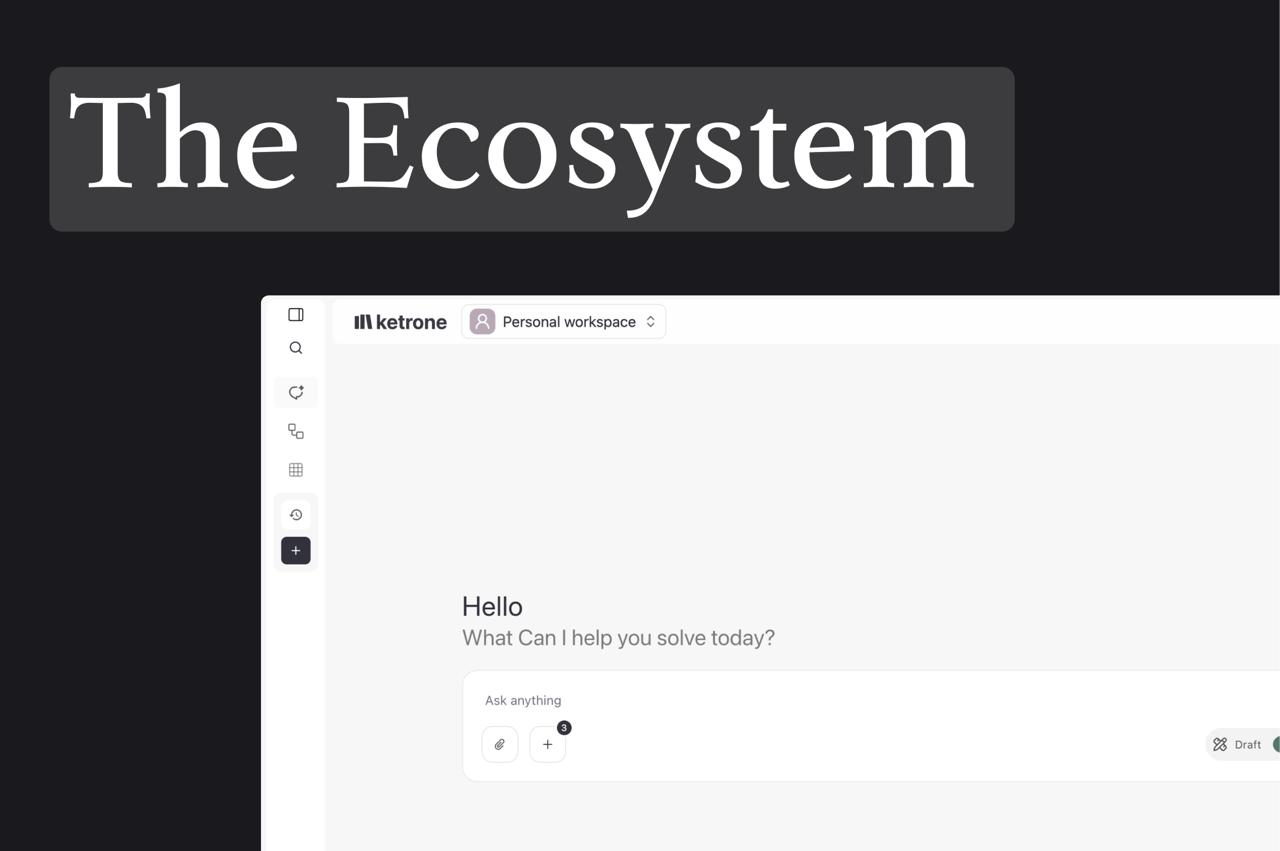
Deployed Specialists (e.g., Ketrone)
Ketrone is built for the mid-to-large firm that requires the capacity gains of AI without the risk of public cloud hosting. Because it is deployed inside the firm and configured to match internal precedents, it acts as a private knowledge base. This is the ideal model for firms handling sensitive cases or those operating across multiple UAE jurisdictions.
Pricing and Deployment: What Firms Actually Pay
Transparency in legal AI pricing remains elusive. Most enterprise vendors refuse to publish rates, requiring a sales cycle and a non-disclosure agreement before naming a number. However, market benchmarking for 2026 indicates that enterprise-tier seats generally run between 3,500 and 7,500 AED per month. Bundled research additions can cost an additional 1,000 to 1,800 AED as an add-on to existing subscriptions.
The hidden cost of these models is often the implementation. If a tool requires your own IT team to spend 100 hours on configuration, the total cost of ownership rises significantly. Deployed models like Ketrone mitigate this by including the configuration and firm-mapping in the deployment timeline. This ensures that the platform is ready for billable work from the moment of rollout.
The deployment roadmap usually follows a structured path:
Frequently Asked Questions
Is legal AI accurate for UAE onshore court cases?
Accuracy is dependent on the database grounding. If the AI is connected to a multilingual database of UAE federal and local laws that is updated daily, it provides highly accurate search and analysis. However, verification by a licensed lawyer remains mandatory for all filings.
Can the AI handle bilingual Arabic-English contracts?
Professional-grade legal AI should analyse both languages simultaneously. It can identify if the Arabic and English versions of a clause are inconsistent, which is a frequent issue in UAE commercial contracts where the Arabic version typically takes precedence in court.
How does AI deployment affect the billable hour?
AI does not eliminate the billable hour; it shifts the focus. By automating the first several hours of document review or data extraction, a lawyer can spend that time on high-value strategy and client advisory. Firms using AI often take on more cases with the same head count, increasing overall revenue.
What are the data rules for AI in the DIFC and ADGM?
Both jurisdictions have updated their data protection regulations to account for AI risks. They require transparency, ethical processing, and often a Data Protection Impact Assessment before deploying autonomous systems.
Conclusion
The transition to legal AI in the UAE is no longer a matter of future speculation. As the National Strategy for Artificial Intelligence 2031 continues to shape government procurement and court efficiency, firms that adopt secure, jurisdiction-native systems will hold a significant capacity advantage. The objective is to ensure that your fee earners are focused on the work that only a lawyer can do, while the platform handles the complexity of the data.
Ketrone is built for the complexity of the UAE legal market. Deployed inside your firm, native in Arabic and English, and grounded in the law of every emirate, it allows your team to lead the work while we keep the platform evolving.