From Fragmented Tools to Ecosystem
Why Legal AI Ecosystems Outperform Single-Function Apps
For more than a decade, digital transformation in the legal sector has advanced tool by tool. Many law firms adopted Artificial Intelligence by defaulting to accumulating a "toolkit" composed of a collection of specialized, single-function tools: one platform for due diligence, another for contract review, a third for research. Individually, these tools are powerful. Together, they will eventually create a fragmented and unsustainable environment.
Fragmentation Creates Data Friction
When a firm relies on disparate isolated apps, every step of the legal workflow becomes a manual handoff: exporting, converting, and re-uploading documents into the next system. This repetitive manual transfer—known as data friction—wastes attorney time, increases the risk of control errors, and slows teams down. By contrast, an integrated platform operates on a single unified data layer, allowing information to flow instantaneously and accurately from one task to the next.
Security Risks Multiply as Tools Multiply
Each new provider in a firm’s toolkit creates another point of security vulnerability. Every provider brings its own encryption protocols and retention policies. Managing this security landscape becomes an administrative burden that grows exponentially with the more tools you add. However, a unified Legal AI ecosystem solves this issue by centralizing security and compliance under one partner, thus, one set of policies. So, instead of navigating a maze of standards, firms will have one single source of accountability.
Legal Work Requires Context that Fragmented Tools Cannot Provide It
Legal work does not happen in silos or across isolated steps. A contract review depends on precedents uncovered during research and discovery insights influence drafting strategy. The problem is that point solutions treat these tasks in isolation since they cannot "talk" to each other which prevents the AI from forming a holistic understanding of the client’s matter and the data background establishing the context of the task at hand. On the other side of the spectrum, a unified legal ecosystem allows the AI to learn from the entire data lifecycle because it works on the same data foundation. This creates output that is not only accurate but strategically aligned with the broader context of legal engagement. This is why the next leap in legal innovation is not another app, it is the rise of a unified Legal AI ecosystem. Firms that prioritize an integrated unified platform gain a definitive competitive edge by eliminating friction, reducing compliance risk, and achieving a seamless workflow.
Ketrone: The End-to-End Solution of legal AI
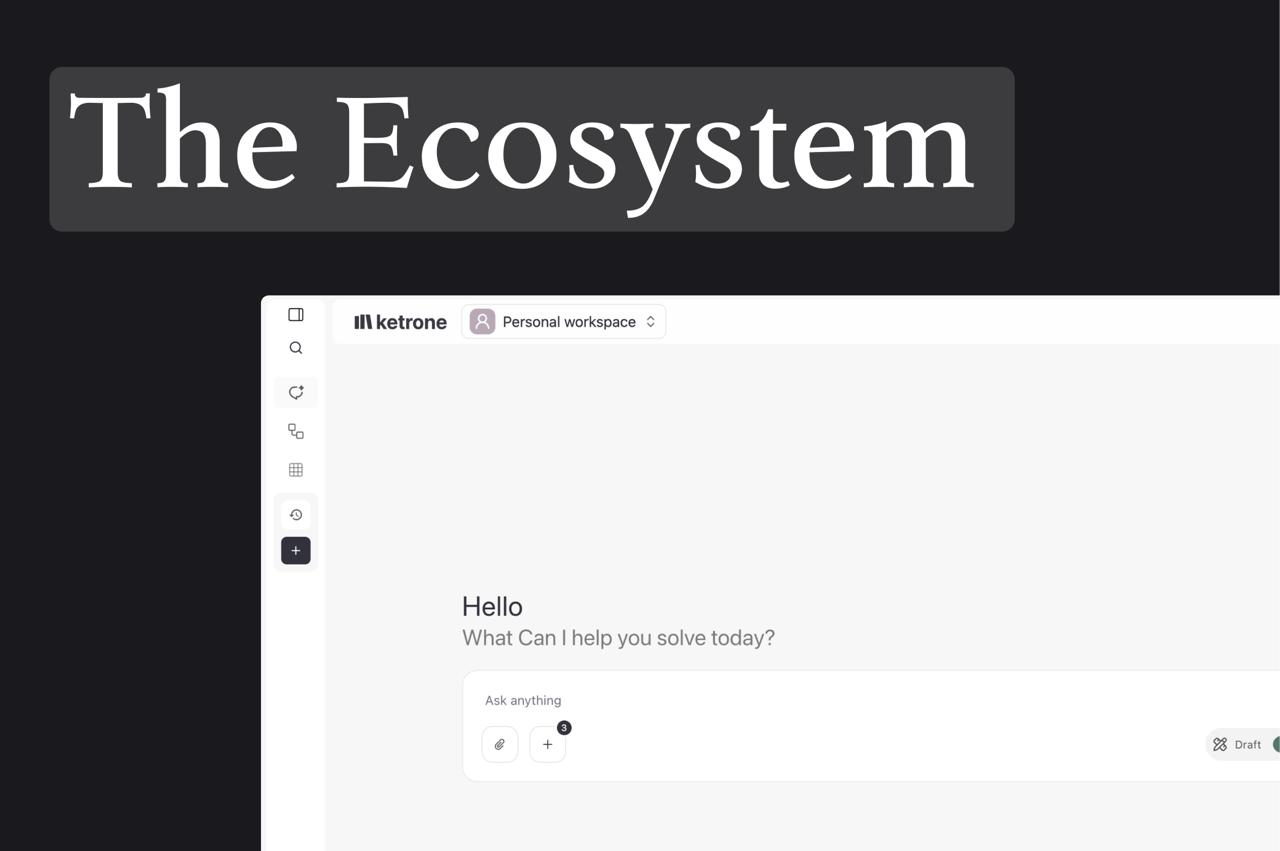
Ketrone embodies this transition as a unified AI-powered Legal ecosystem. It connects every phase of legal work within one secure, context-aware platform.
By moving beyond the fragmented toolkit and embracing an integrated system, law firms secure control over their most valuable assets: time, data, and client trust. They will gain:
- Higher efficiency through continuous workflows
- Reduced compliance risk via centralized governance
- Smarter outputs supported by full context
- A clear competitive advantage in both speed and quality
Choosing an AI partner built around a unified ecosystem that places data integrity, and rigorous compliance at its core is the defining step toward maintaining strategic advantage in the next era of legal practice.