Harvey AI Alternatives for Small and Mid-Sized Firms: An Honest Comparison
Ketrone: An Honest Comparison
An objective look at Harvey, CoCounsel, Lexis+ AI and Ketrone for small and mid-sized firms: real costs, seat minimums, hosting, and language.
Harvey AI Alternatives for Small and Mid-Sized Firms: An Honest Comparison
Firms adopt legal AI to expand caseload, manage cross-border disputes in multiple languages, and get more from existing teams without heavy overhead. In practice, the path to firm-wide adoption is often blocked by commercial, structural, and regulatory mismatches. Individual lawyers adopt tools quickly; firm-wide rollout lags on cost and fit. 13
Many well-known legal AI assistants are built around the budgets and operating models of global enterprises, the Am Law 100 or Magic Circle. For small and mid-sized firms, that introduces artificial cost floors and real data-handling risk under local law. Here is an objective look at Harvey alongside its main alternatives: real costs, technical limits, and regional compliance.
The Harvey equation: high barriers for mid-sized practices
Harvey has strong visibility in legal tech, with large funding rounds and firm-wide deals at global organisations. 5 For smaller and mid-sized firms, several friction points show up.
Opaque contract terms. Harvey does not publish pricing. Firms are routed through enterprise sales cycles, often signing NDAs before terms are shared. 4
Seat commitment floors. Industry trackers point to a minimum seat requirement, typically 20 to 25 users. 4 At mid-market rates of roughly $1,000 to $1,200 per user per month, the annual entry point starts near $288,000. 14
Implementation timelines. Deploying and configuring workflows frequently takes months of custom development and consulting time. 3
Translation layers. Because the models are configured for English-centric jurisdictions, non-English material is often routed through translation. That can strip nuanced legislative context, a real problem for civil-law structures or specialised administrative codes.
Mid-sized firms generally weigh two camps: traditional legal-tech incumbents, or specialised modern platforms.
1. Thomson Reuters CoCounsel
Since Casetext was acquired by Thomson Reuters, its AI assistant has been folded into the Westlaw and Practical Law stack. 12 For US litigators with the budget, CoCounsel offers verified research grounded in primary case law. Standalone access has changed 11, though: mid-sized firms report that reaching CoCounsel usually means keeping an active, expensive core Westlaw subscription. 10 The result is meaningful recurring fees with limited room to customise internal templates, precedents, or non-English cases.
2. Lexis+ AI and Protégé
LexisNexis offers Lexis+ AI with its assistant, Protégé. Like CoCounsel, its strength is a vast library of proprietary treatises, guidance, and primary law 8, with reliable citations and risk-minimised answers. Commercially, it is an add-on tier to an existing contract 7, predictable for domestic frameworks, but a closed, vendor-controlled public cloud. There is no private-cloud install and no deep integration with a firm's own historical document databases.
3. Ketrone: the sovereign, customisable alternative
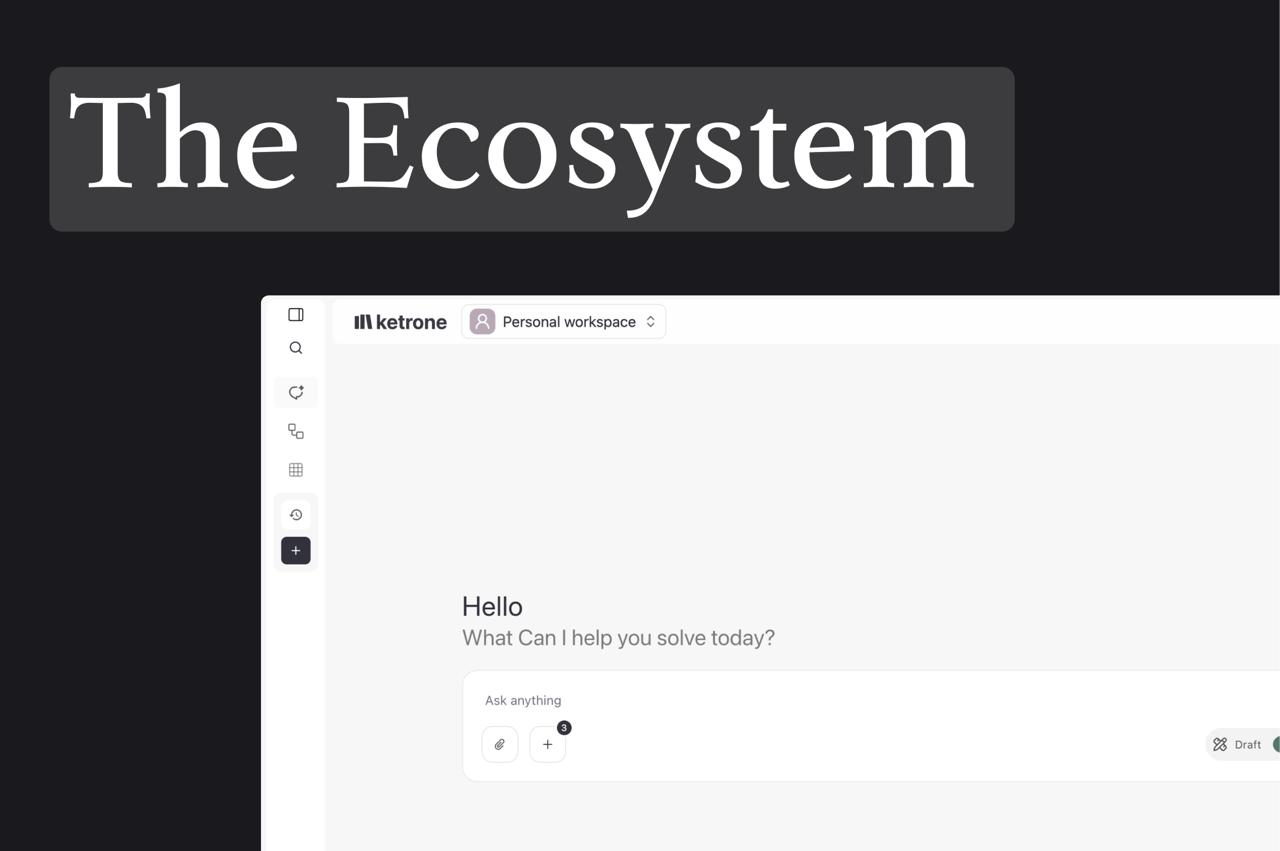
Ketrone is built for the realities of mid-sized and growing regional firms, deployed and customised inside the firm's own infrastructure.
Sovereign deployment. Deployed inside the firm's private cloud or security perimeter, so sensitive files stay under the firm's control, in line with local data-residency mandates.
Jurisdiction and language native. No intermediate English translation. Ketrone reasons in the language the law was written in, including Arabic, French, German, Korean, and English, preserving legal syntax and statutory definitions.
Traceability and citation. Every output is anchored to a verified source document, with a library kept current to reflect the latest decrees, precedents, and legislative updates.
No seat minimums. No artificial user limits or multi-hundred-thousand-dollar floors. Start with a pilot group on live cases before a wider rollout.
Implementation and customisation. Integrated with the firm's precedents, templates, and workflows in two to eight weeks.
Assess your sovereign deployment
Keep client data inside your jurisdiction while running multi-lingual legal analysis, on a configuration with no seat commitments.
The central issue with external legal AI is data control. Foreign cloud setups create compliance exposure under strict data-protection frameworks.
The UAE Federal Personal Data Protection Law (Federal Decree-Law No. 45 of 2021) establishes a comprehensive national framework for processing and transferring personal data. 11 Crucially, entities operating within financial free zones, such as the DIFC or ADGM, must comply with localized, highly proactive regional regimes. 12 Under the DIFC Data Protection Regulations (specifically Regulation 10), firms deploying autonomous and semi-autonomous systems must ensure systemic transparency, disclose algorithmic logic, and perform rigorous Data Protection Impact Assessments (DPIAs). 12
Parallel restrictions apply under Saudi Arabia's Personal Data Protection Law (PDPL), enforced by the Saudi Data & Artificial Intelligence Authority (SDAIA). 6 The PDPL mandates that cross-border transfers of personal data must satisfy strict statutory gateways, including formal Transfer Risk Assessments (TRAs) and the execution of approved Standard Contractual Clauses (SCCs).
In practice, routinely uploading highly sensitive client files, corporate records, or judicial pleadings to multi-tenant public clouds hosted outside Saudi Arabia without these rigorous safeguards exposes firms to severe regulatory penalties. By keeping data processing and sovereign workloads strictly within local sandboxed environments, Ketrone directly resolves this cross-border liability gap.
No multi-month integration cycle. Ketrone is deployed, tuned to internal templates, and integrated with core precedents in a structured programme.
1
Weeks 1-2 · Sovereign perimeter deployment
Stand up the environment inside the firm's cloud or servers.
2
Weeks 3-4 · Precedents and custom workflows
Encode the firm's templates, precedents, and standards.
3
Weeks 5-6 · Database integration
Connect jurisdiction sources and the firm's document base.
4
Weeks 7-8 · Pilot launch and go-live
Run on live cases, then widen the rollout.
Making a factual assessment
For large, US-centric firms with big tech budgets, Harvey or CoCounsel can slot into existing infrastructure. For mid-sized practices running multi-lingual cases, operating under local data-sovereignty law, and needing custom precedents without heavy cost commitments, a local deployment model is the better fit.
Firms can move forward without exposing sensitive files to external databases and without paying for empty seat commitments, securing client data, meeting local compliance, and scaling caseload with the team they already have.
See your firm's sovereign legal AI
Deploy a secure, customised platform inside your private-cloud perimeter in two to eight weeks, with full data sovereignty and native reasoning in your jurisdiction.